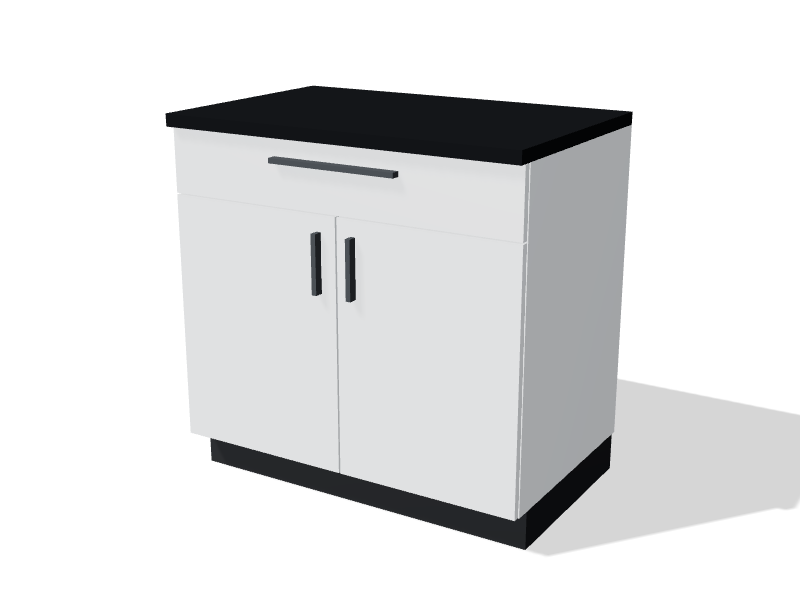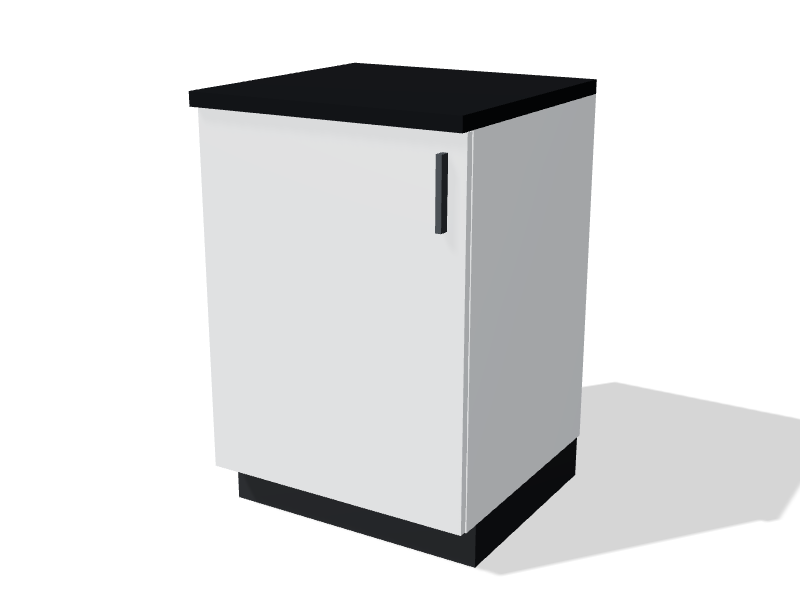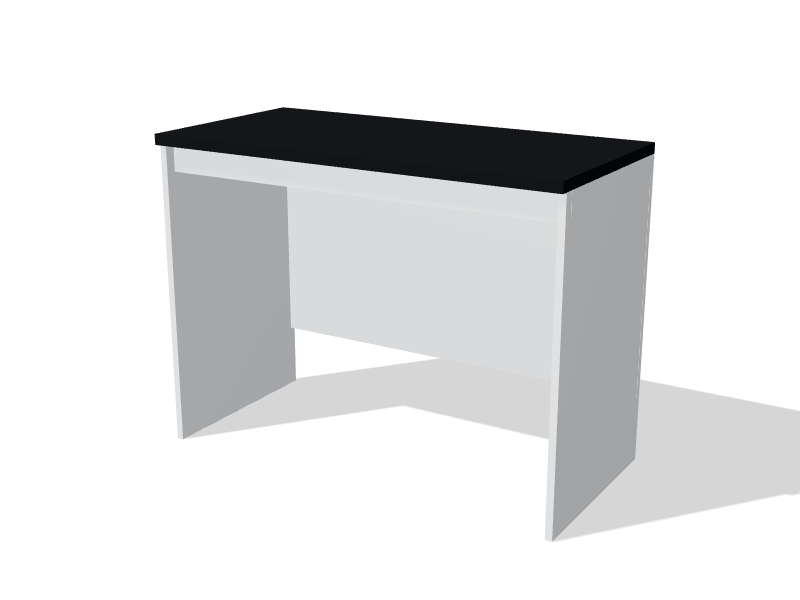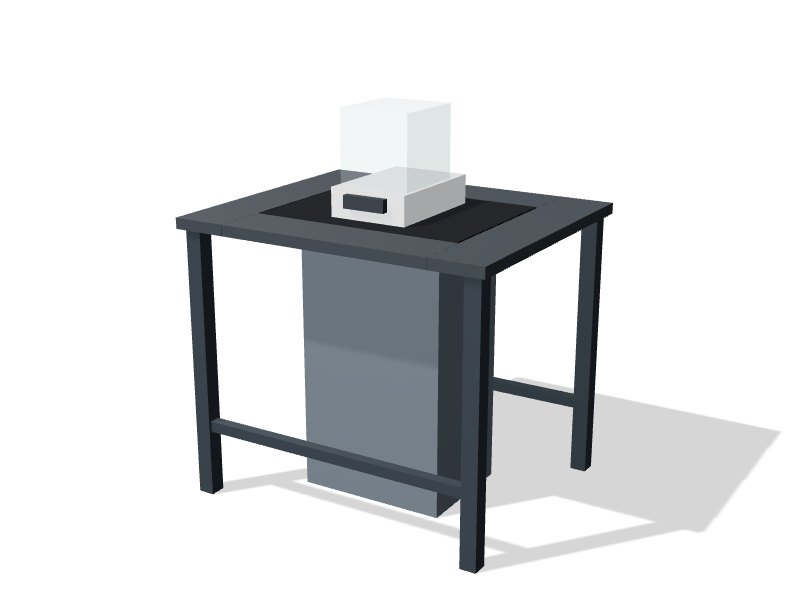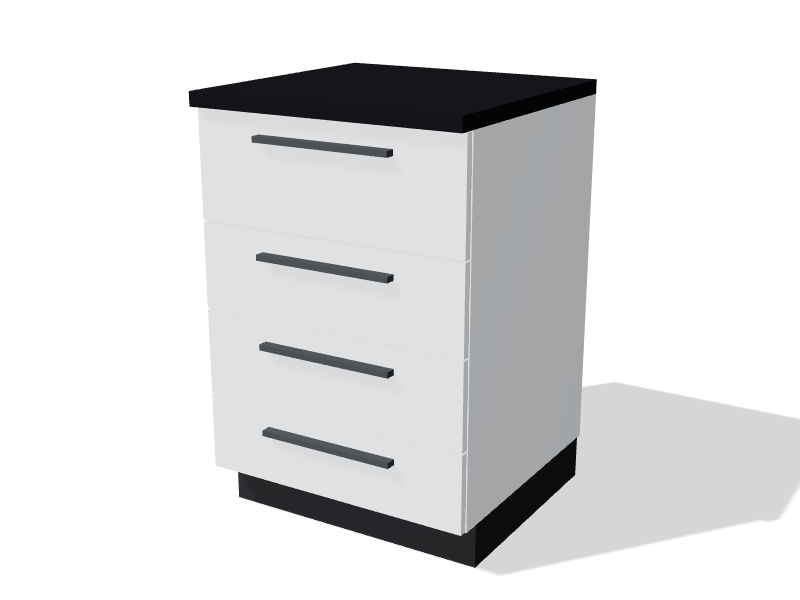
The 600 mm model
BC-4D-0600 is the 600 mm (23½ in) wide version of the base cabinet, 4 drawers. It is 560 mm deep and 900 mm high, floor-standing. It also comes in 450 mm, 900 mm.
Price by option at 600 mm
| Option | Choice | List price |
|---|---|---|
| Finish | Painted steel, Arctic white | $1,810 |
| Finish | Painted steel, Slate blue | $1,810 |
| Finish | Solid phenolic, Pearl grey | $2,000 |
| Finish | Maple veneer | $1,940 |
| Finish | Stainless steel 304 | $2,510 |
| Worktop | Epoxy resin, black | $1,810 |
| Worktop | Phenolic resin, charcoal | $1,750 |
| Worktop | Stainless steel 316 | $1,970 |
| Worktop | No worktop | $1,560 |
What it's for
A four-drawer base cabinet keeps small items visible and in reach without kneeling: pipette tips, syringes, filters, stir bars, spatulas, labels, small tools and boxed glassware. When everything sits in a single layer, people can see what is there, take what they need and close the drawer. That makes drawers the better choice for anything used several times a day, while door cabinets take the bulk stock.
Construction and features
The drawers run on full-extension slides rated to 45 kg (100 lb) each, so the back of the drawer comes completely clear of the cabinet and nothing gets lost at the rear. Drawer heights are graduated: shallow at the top for small parts and paperwork, deeper toward the bottom for glassware, bottles and boxed consumables.
When comparing lab drawer cabinets, look for:
- Drawer boxes that are formed or welded rather than stapled or glued.
- Fronts that are double-walled or reinforced so the pulls stay tight under daily use.
- Slides with a positive stop and a hold-closed detent, so drawers do not drift open on a slightly uneven floor.
- A chemical-resistant finish on the drawer interiors. Small spills sit unnoticed in drawers longer than anywhere else in a cabinet.
The drawer configurations guide compares four-drawer stacks with other splits and explains when each makes sense.
Sizes and options
The finish choices are painted steel (Arctic white or Slate blue), solid phenolic, maple veneer or stainless 304. Worktop choices are epoxy resin, phenolic resin, stainless 316, or none when the cabinet goes under a continuous top.
Where it fits
Drawer units carry most of the storage in instrument-heavy rooms. An analytical chemistry lab uses them for vials, septa, syringes and column fittings. A molecular biology and PCR lab fills them with tips, tubes and plates, often with separate stocks for the pre- and post-amplification areas. A hospital clinical lab keeps collection supplies and small consumables in them beside each workstation.
Planning notes
- Put drawer units where the work happens: next to a knee space or a balance table, not at the far end of a run.
- An open drawer projects nearly the full cabinet depth into the aisle. Allow for that plus a person standing behind it; see aisle widths and clearances.
- Avoid inside corners and spots beside a tall cabinet or equipment where an adjacent handle or door blocks full extension.
- Load heavy items in the lowest drawer. Heavy stock up top makes drawers harder to use and puts more strain on the slides.
- Label drawer fronts by content when the lab moves in. It takes an hour and saves many more.
All sizes
| Code | Width | Depth × height | From |
|---|---|---|---|
| BC-4D-0450 | 450 mm (17½ in) | 560 × 900 mm | $1,420 |
| BC-4D-0600 | 600 mm (23½ in) | 560 × 900 mm | $1,560 |
| BC-4D-0900 | 900 mm (35½ in) | 560 × 900 mm | $1,890 |